THE TURN
The most important shift in Outer Passage is not a sudden collapse or a decisive breakthrough, but a recovery. D3ad End is regaining ground in a campaign that has kept the region under sustained pressure for four days, and that change matters because it suggests the defenders are still capable of absorbing strain and answering back. In a sovereignty struggle, that kind of movement can slow an offensive’s momentum and force the wider campaign to work harder for every inch of space.
THE WIDENING FRONT
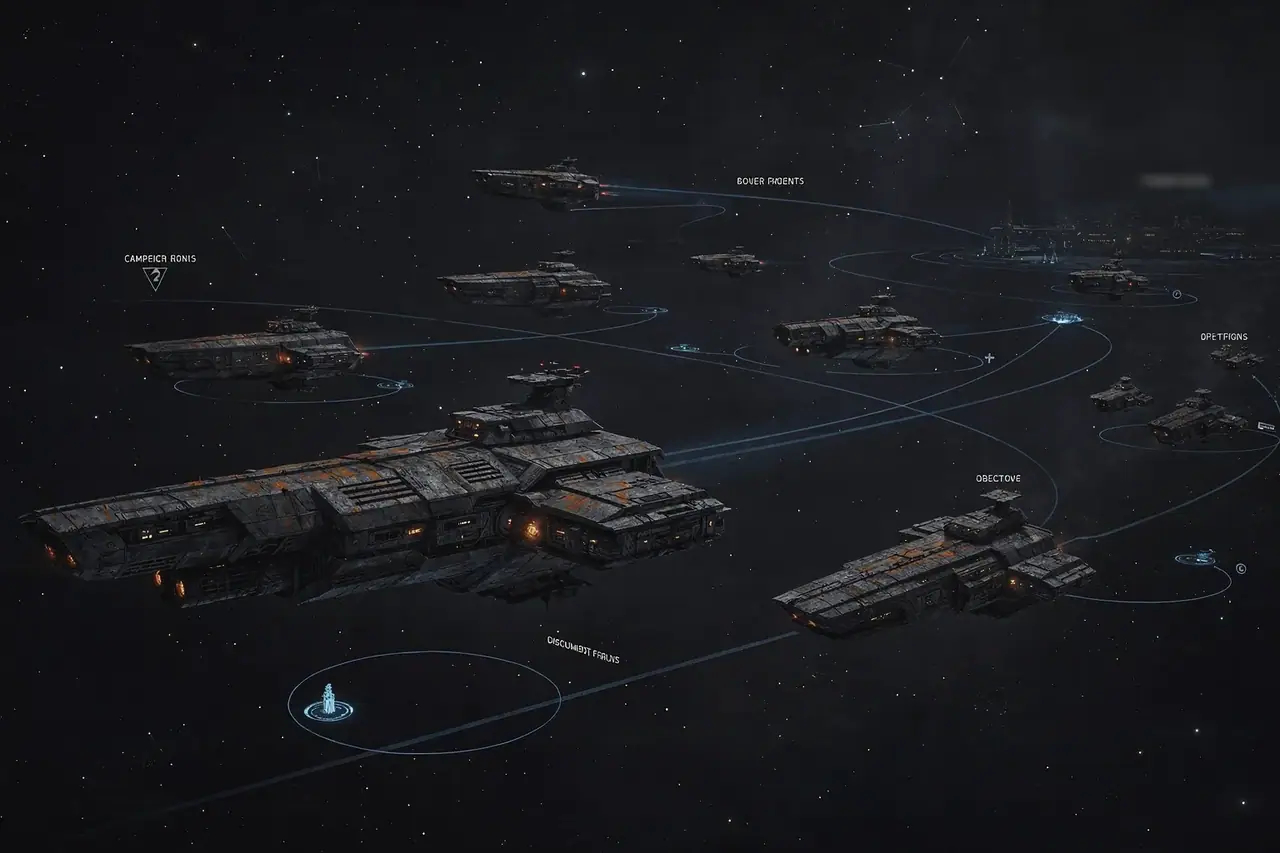
The fight is still defined by broad regional pressure, and the system list shows that the front remains active across 2ID-87, JBUH-H, and XDTW-F. JBUH-H is the new addition, and its presence points to pressure spreading into fresh territory rather than fading at the edges. That kind of expansion usually matters more than a single timer: it can stretch defenders, complicate logistics, and turn a focused campaign into something more difficult to contain.
THE HOLD
For D3ad End, regaining ground does not mean the pressure has lifted. The region remains contested, and the campaign’s current shape suggests the defenders are fighting to stabilise the situation rather than simply survive it. If they can continue to recover lost ground while holding the line in the systems already under threat, they may begin to blunt the campaign’s broader reach and force the attackers to reconsider where the next push should fall.
THE NEXT FRONT
With no systems removed from the fight, Outer Passage still looks unsettled, and that is what makes the current phase worth watching. The campaign appears to be evolving rather than closing, with the balance now influenced by whether the defenders can turn this recovery into sustained resistance. If pressure continues to spread while D3ad End keeps regaining ground, the region could be heading into a longer struggle over staging, access, and control rather than a quick resolution.