THE SHIFT
The most important change in Outer Passage is not that the campaign continues, but that the defenders are beginning to claw back space. D3ad End is still under pressure, yet the current balance suggests the initial momentum has been interrupted. In a regional campaign this broad, that kind of change matters: it can steady local defences, complicate hostile staging, and force attackers to work harder to maintain pressure across multiple systems.
THE BROAD FRONT
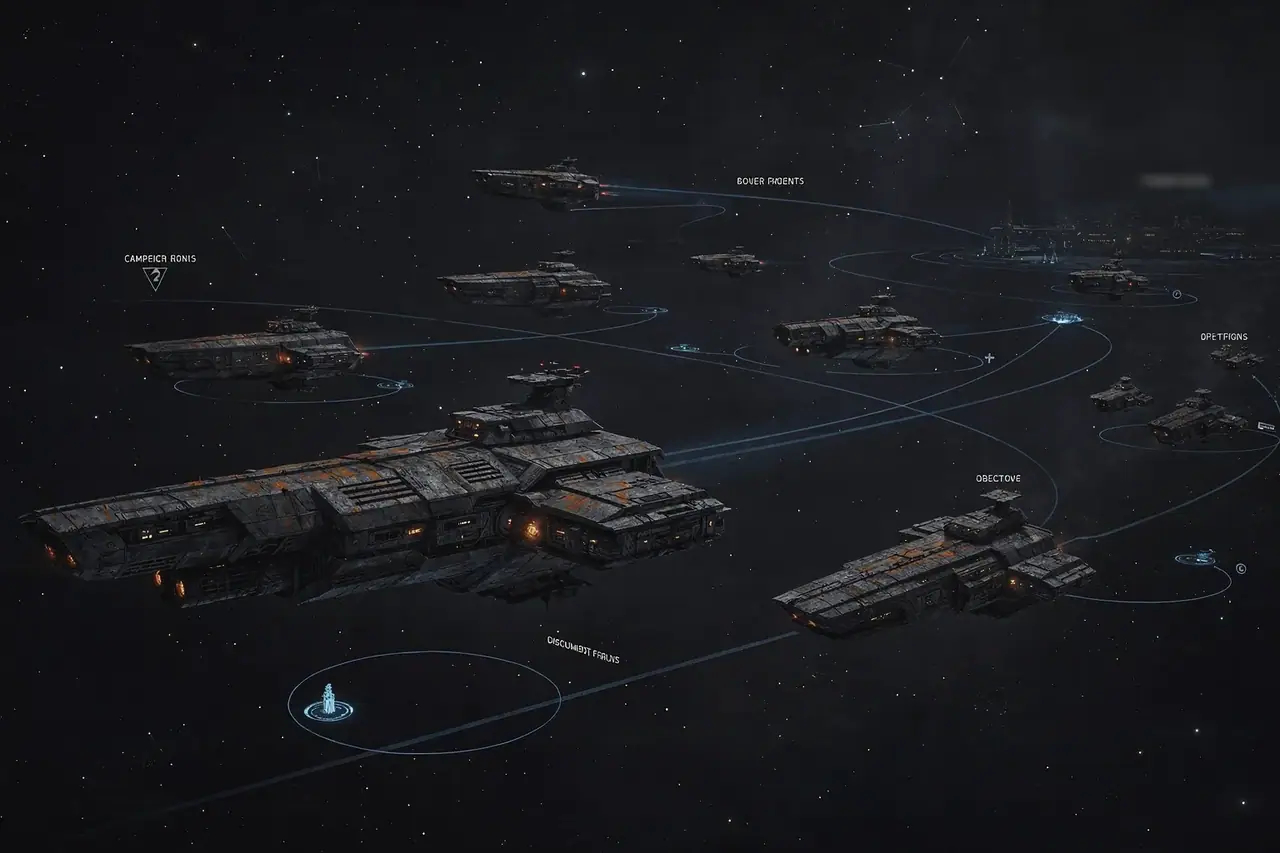
This is not a contained skirmish around a single objective. The campaign scope remains wide, with 2ID-87, 8K-QCZ, and FVQF-W all part of the picture, and 2ID-87 newly added to the systems in play. That expansion suggests the front is spreading rather than settling. For both sides, that usually means more than just extra timers; it means more routes to watch, more space to defend, and more opportunities for the conflict to branch outward.
THE STANDOFF
The presence of multiple active systems points to a campaign that is still being shaped in real time. With no systems removed from the theatre, the pressure appears to be accumulating rather than collapsing into a single decisive push. That can be a sign of endurance on both sides: attackers trying to keep the initiative, and defenders trying to absorb the strain while recovering ground where they can.
WHAT IT MAY SIGNAL NEXT
If the current trend holds, Outer Passage could be entering a more contested phase rather than a rapid breakthrough. Regaining ground gives D3ad End room to stabilise, but the spread into additional systems suggests the wider campaign is far from settled. For residents and power blocs watching the region, the key question now is whether the defenders can turn this recovery into a firmer hold, or whether renewed pressure will open yet another front.