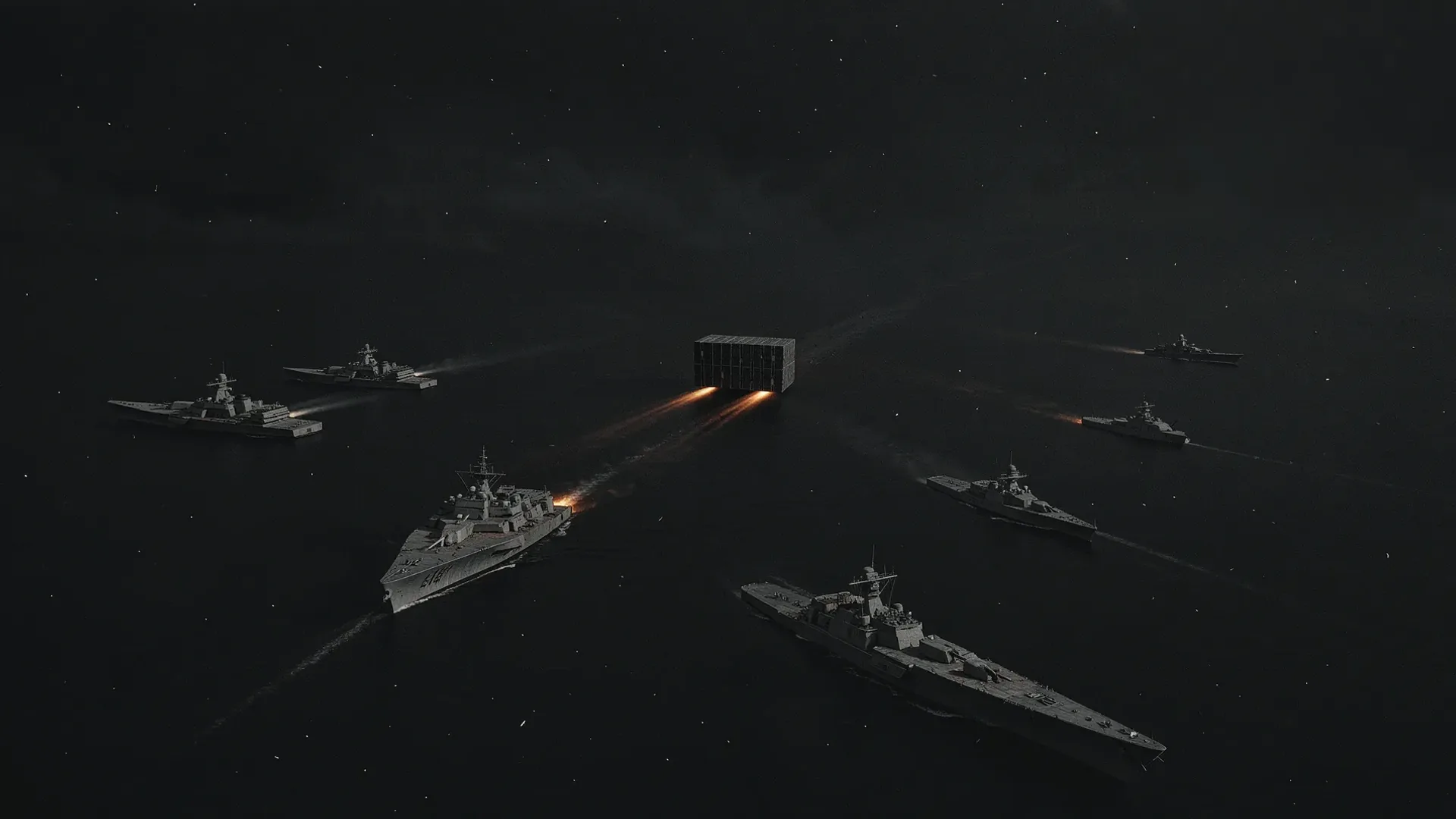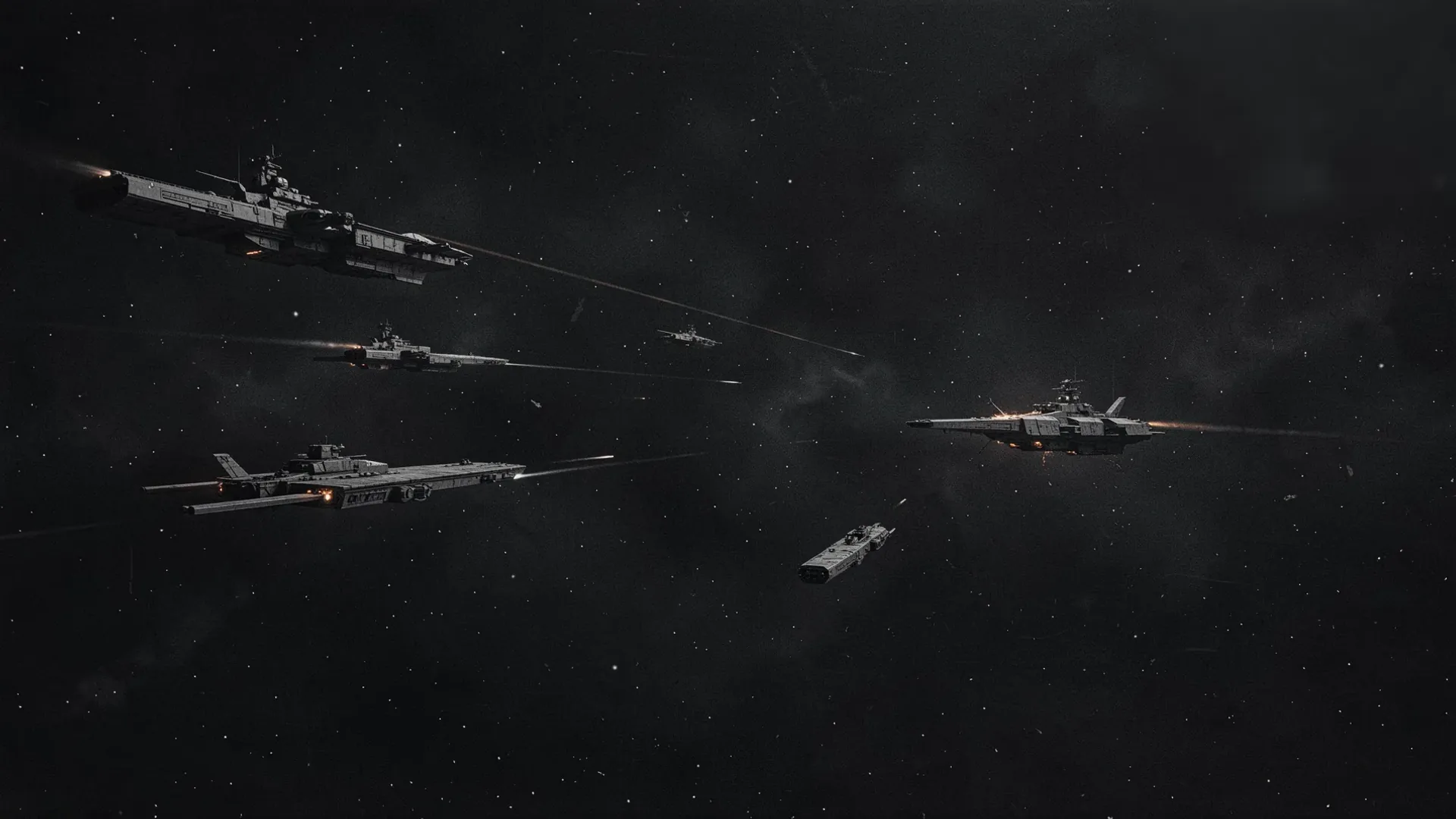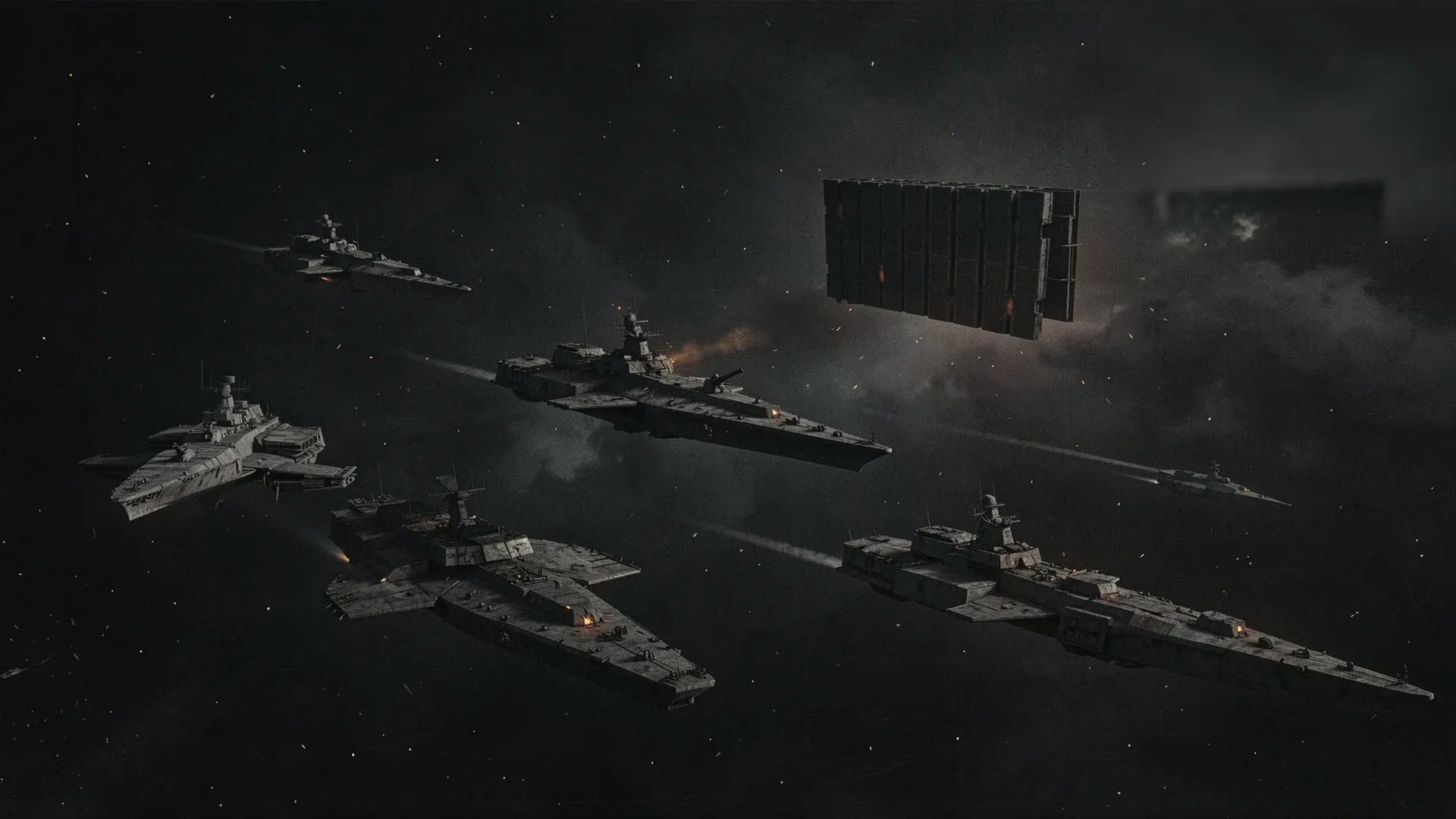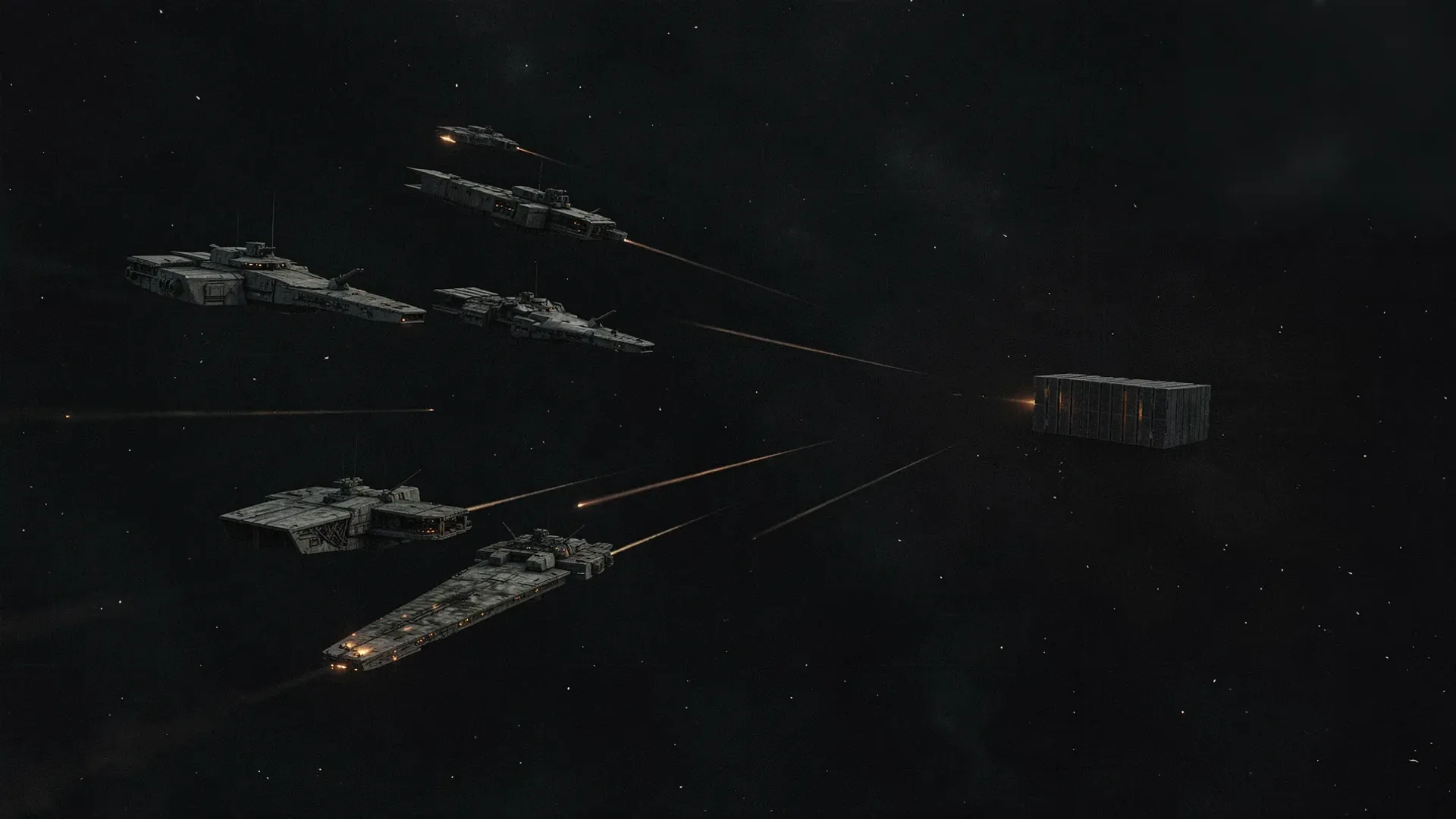
A Front That Spreads Without Advancing
Early observations recorded a single contest over 7-YHRX. Within a day the list jumped to five systems, then contracted and expanded again, peaking at nine before settling to six: DAI-SH, QCGG-Q, RIU-GC, V3P-AZ, XU-BF8, and Y6-9LF. Y6-9LF has stayed on the board since the front widened, while early names like N-H95C and X-PQEX have dropped away. The current spread is an active campaign area, not a conquered frontier.
Two Defenders, One Static Scoreboard
UA Fleets Holding shoulders the larger burden: five systems, high intensity, defensive momentum. Tilean Dominium's single-system front is comparatively low intensity. Across both, the averages are identical: attacker 40, defender 60. The score has twitched twice without breaking pattern: attacker score briefly rose to 47, then later to 43, before settling back to 40 each time. That sequence suggests pressure applied but not sustained.
Infrastructure Timers, Not Sovereignty Transfers
All six current systems are under infrastructure hub defense events. No recent sovereignty changes have been logged; nothing has changed hands. In New Eden, an ihub defense window is a countdown, not a conquest. The widening front means defenders must cover more countdowns at once, a logistics problem as much as a tactical one. The attacker can force timers in new systems without converting any of them into strategic gains.
Endurance on a Cooling Front
The campaign's shape has been volatile: system counts rose from one to nine, then fell back to six as momentum cooled. Systems like S-R9J2, A0M-R8, and LY-WRW flared and disappeared. For UA Fleets Holding, five active ihub defenses at once is a high-intensity routine; for Tilean Dominium, a single defense is a quieter but persistent weight. The front is wider than six days ago, but no stronger. Holding the map remains the entire story.