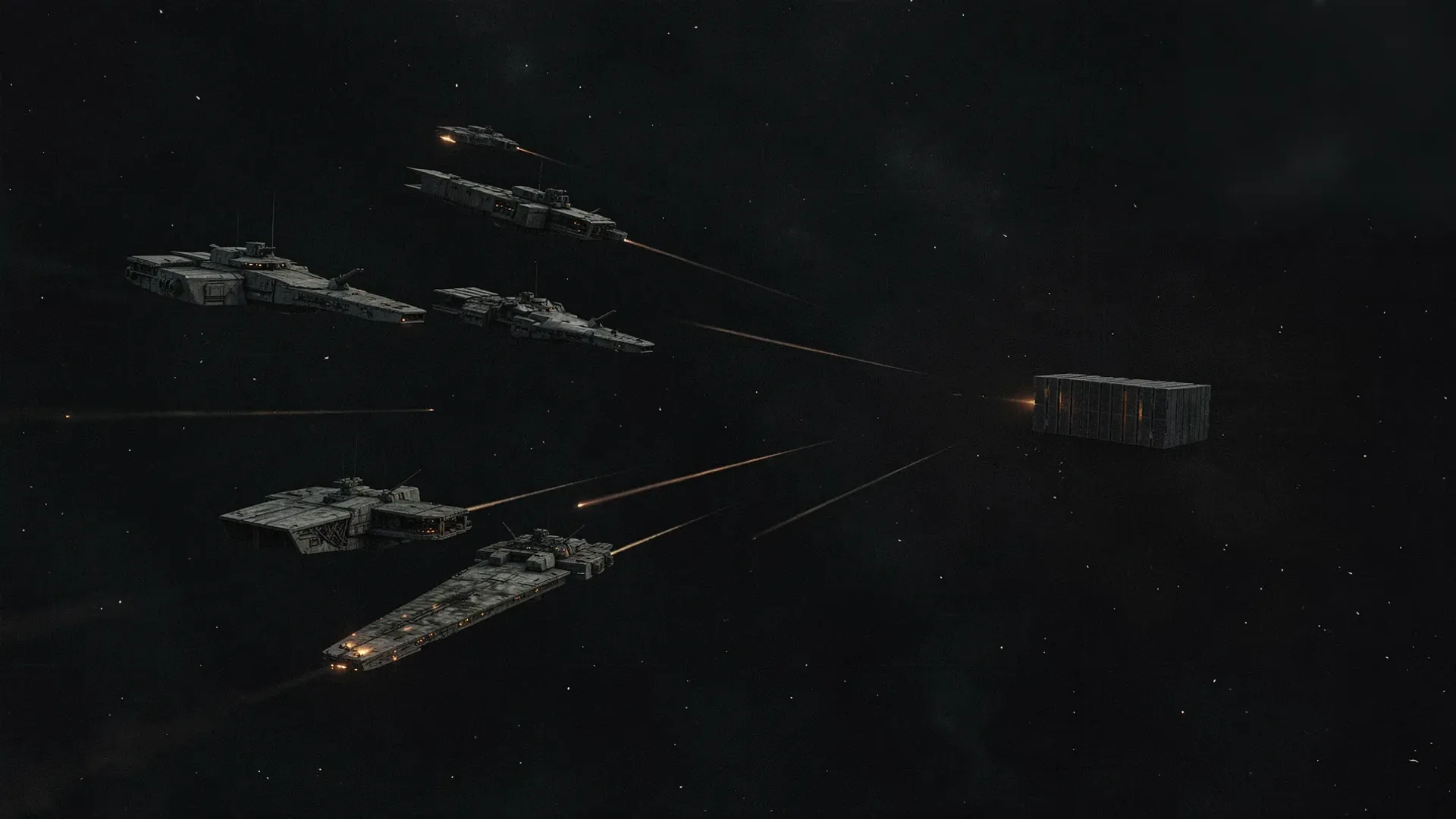
A Front That Replaces Itself
On 8 November the contested list was 7-YHRX, N-H95C, NSI-MW, X-PQEX and Y6-9LF. Today it is C-KW6X, F-WZYG, QCGG-Q, RIU-GC, S-R9J2, V3P-AZ and X1W-AL. Between those snapshots the count dropped to four, jumped to nine, fell to three, and re-expanded. The score has been far from immutable: it dipped to 37/64, spiked to 54/46, and returned to 40/60, but no system changed hands. The only reliable constant is that sovereignty remained intact.
Six Timers for One Defender, a Lone Timer for Another
UA Fleets Holding's own front accounts for six of the seven systems and is tagged high intensity with offensive momentum. The other defending party, Tilean Dominium, holds a single system in a low-intensity defensive campaign. Both currently post the same 40/60 scoreline, but the pressure is manifestly uneven: one side is managing a broad, active timer board while the other defends a single ihub. No attacker organization is named in the front data; the contest is measured entirely against the defenders' infrastructure.
All Roads Lead to Ihub Defense
Every contested system in Malpais is currently listed as an ihub defense event. There are no notable hulls, no fleet engagements reported, no killmails attached to the campaign data. High intensity here does not describe a running battle; it describes the number of timers simultaneously demanding attention. The sovereignty machinery is grinding through reinforcement cycles, and for now the only thing at stake is whether the infrastructure timers get answered.
A Stalemate That Spreads, Not Breaks
Across 143 hours and 13 observations, the contested footprint grew from five systems to seven, with counts swinging between three and nine along the way. No systems have been gained or lost by either defender. This is not the opening act of a conquest; it is the sustained condition of a contested border, where holding ground means enduring a rotating list of timers that never quite tip over.