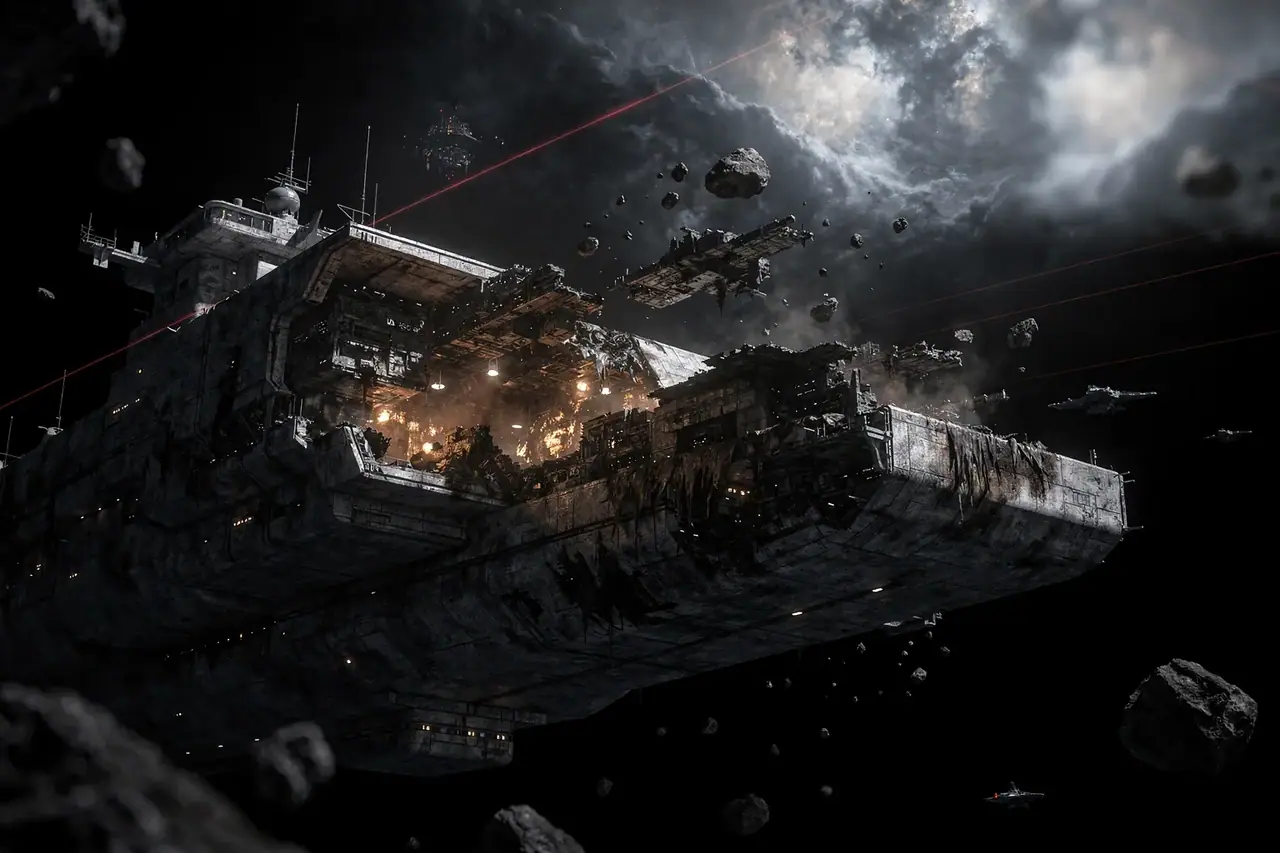
THE PUSH
The clearest signal from Perrigen Falls is that the attackers are still advancing. Seven days into the campaign, the balance remains tilted in their favour, and the pressure has not slackened. With J9A-BH, L-POLO, OP7-BP and PT-2KR still carrying the weight of the fight, the offensive looks focused rather than scattered, suggesting a deliberate effort to keep the defenders reacting along a fixed frontier.
THE HOLD
For Get Off My Lawn, the challenge is no longer simply about absorbing isolated hits. The campaign is described as broad regional pressure, but the current signals point to that pressure being concentrated in a stable front. That matters: when a line stops expanding but remains active, defenders are forced to commit resources to holding the same ground over and over, limiting their ability to reset elsewhere in the region.
THE SHAPE OF THE FRONT
The removal of 3LL-O0 and 49V-E4 from the systems in play hints at a narrower battlefield than earlier in the campaign. Even so, the remaining systems keep Perrigen Falls firmly in play, and the absence of any added systems suggests the conflict is not spreading outward so much as hardening around its existing axis. That kind of consolidation can be just as dangerous as expansion, because it allows pressure to build in one place until something gives.
WHAT COMES NEXT
With attackers still gaining ground and the same front remaining active, the next stage may be defined by endurance rather than spectacle. If the offensive continues to concentrate pressure in this stable line, the defenders will need to find a way to break the momentum or risk seeing the campaign settle further against them. For now, Perrigen Falls looks less like a flashpoint and more like a region under sustained strategic squeeze.