THE HOLD
The most important change in Outer Passage is not a collapse or a breakthrough, but a shift in control along a front that had been leaning on the defenders. D3ad End is now regaining ground, and that matters because it suggests the campaign is moving away from pure pressure and toward a contested struggle over who can hold the line. In a regional campaign like this, that kind of recovery can change the tone of the entire front.
THE FRONT LINE
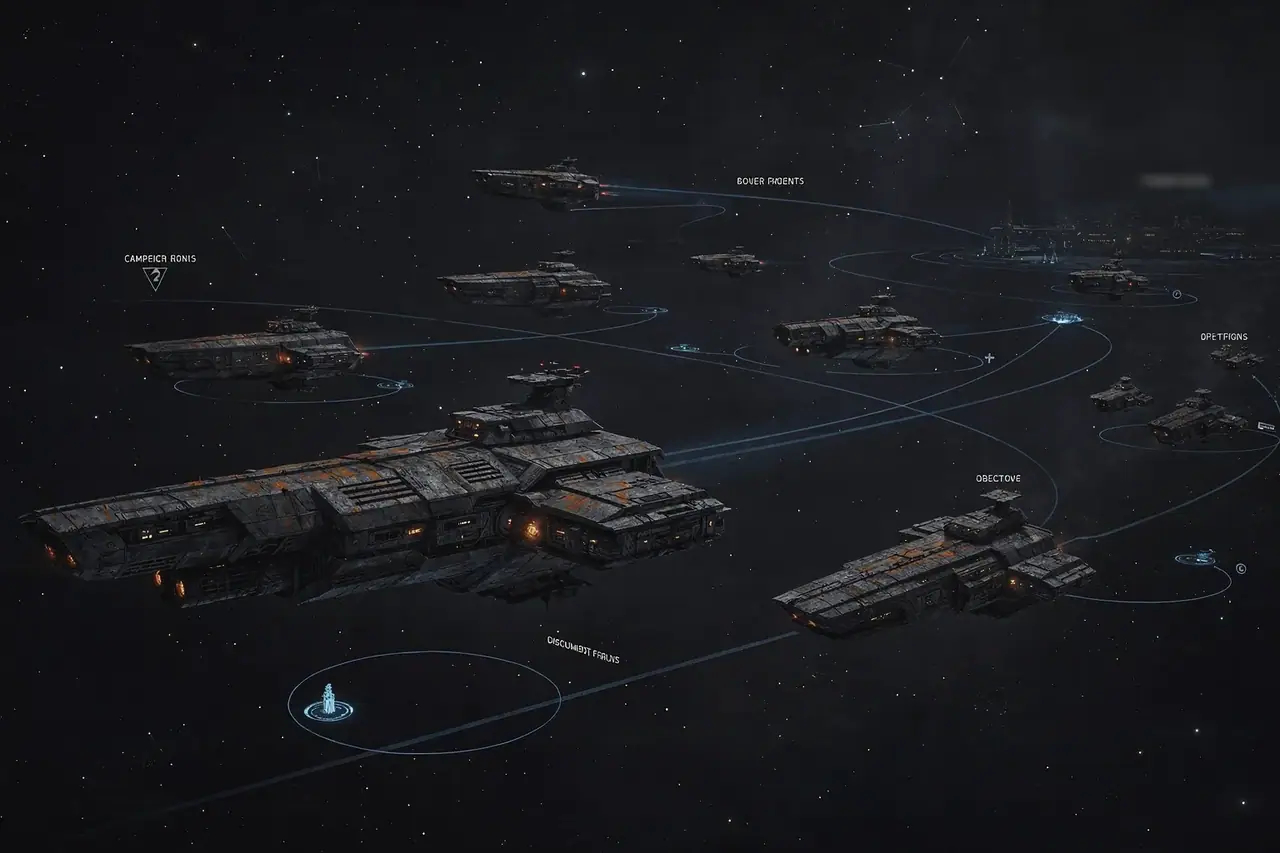
The pressure remains concentrated across a stable set of systems: 8K-QCZ, DJ-GBH, FVQF-W and JBUH-H. With no new systems added and none removed, the campaign has not expanded outward, but instead appears to be tightening around an established corridor of conflict. That kind of concentration often points to a front that is becoming more defined, where both sides are committing to the same strategic ground rather than spreading force across the region.
THE BROADER CAMPAIGN
Outer Passage is still under broad regional pressure, and that wider strain gives the defenders’ recovery added weight. When a campaign stays active for several days without widening, the story is often one of endurance: logistics, staging and staying power matter as much as any immediate tactical exchange. D3ad End’s ability to regain ground after three days suggests the contest is entering a more deliberate phase, where control of individual systems carries growing strategic importance.
WHAT COMES NEXT
The current balance suggests the campaign is not close to resolution, but it does appear to be entering a more stable and harder-fought stage. If the defenders continue to recover ground, the pressure in Outer Passage could become less about expansion and more about consolidation on both sides. For now, the front remains live, the systems remain contested, and D3ad End has given clear signs that it is not yielding the region without a fight.