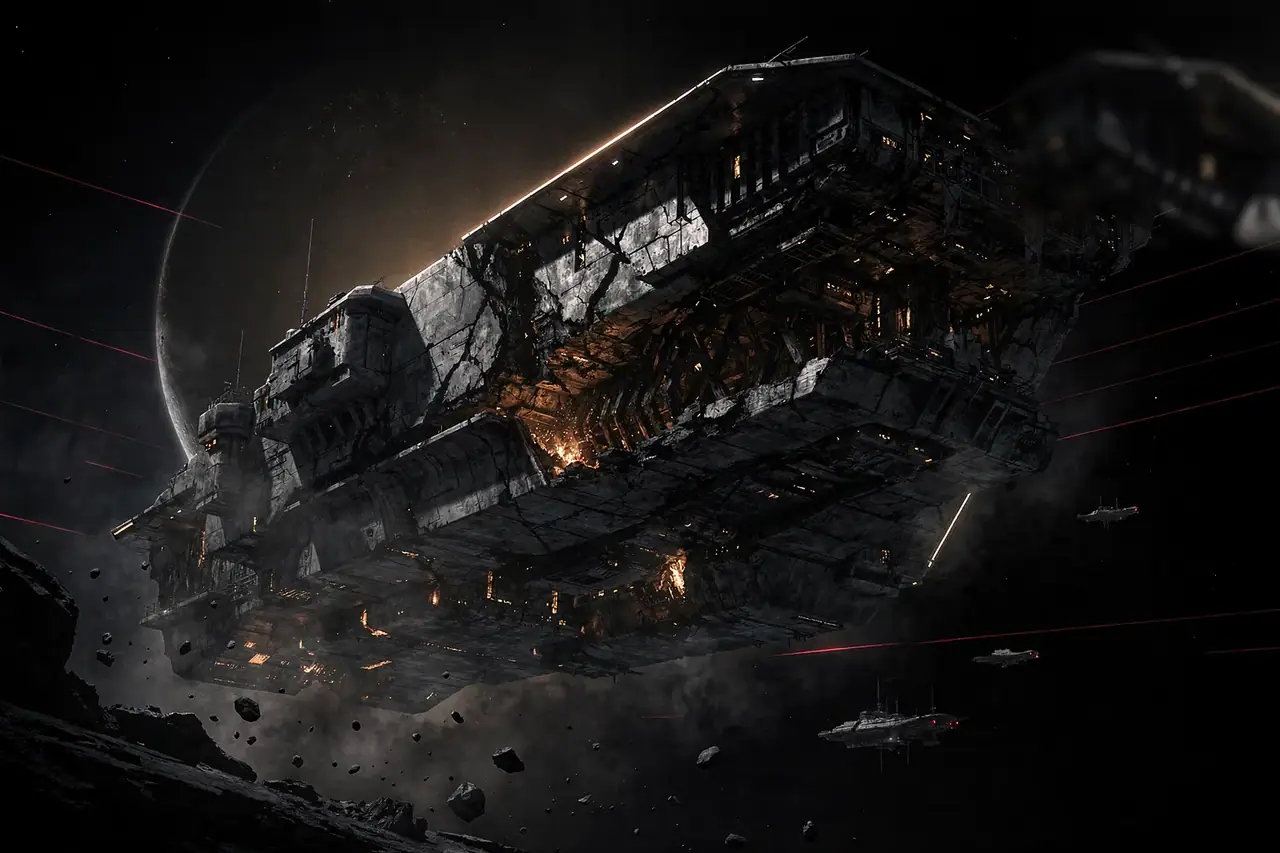
THE SHIFT
The key development is straightforward: 6Q4-X6 has left alliance control. BorderZone no longer holds sovereignty there, and the system now sits outside recognised ownership altogether. That kind of transition matters because it does not just redraw a map marker — it removes a layer of political certainty from the system and leaves its future position in the region unresolved.
THE IMMEDIATE EFFECT
In practical terms, the loss of holding in 6Q4-X6 suggests BorderZone’s grip on the area has weakened, at least for now. Systems that fall into unclaimed space can become harder to anchor around politically, and they often create opportunities for others to test the surrounding frontier. Even without further movement reported here, the shift itself is enough to change how neighbours may view the route and the security of the space around it.
THE WIDER FRONTIER
This is not yet a full campaign report, but it does point to a meaningful change in local momentum. A system leaving recognised control can be the first visible sign of a broader withdrawal, a contested border, or a period of consolidation elsewhere. For line members, industrialists and roaming fleets alike, that can alter everything from staging confidence to the way traffic flows through the region.
WHAT COMES NEXT
With 6Q4-X6 now ownerless, the important question is who, if anyone, moves to shape the vacuum next. The absence of recognised control may invite renewed attention from BorderZone or from any group looking to exploit the opening. For now, the system stands as a small but telling reminder that sovereignty in New Eden can change hands — or disappear entirely — with little warning.