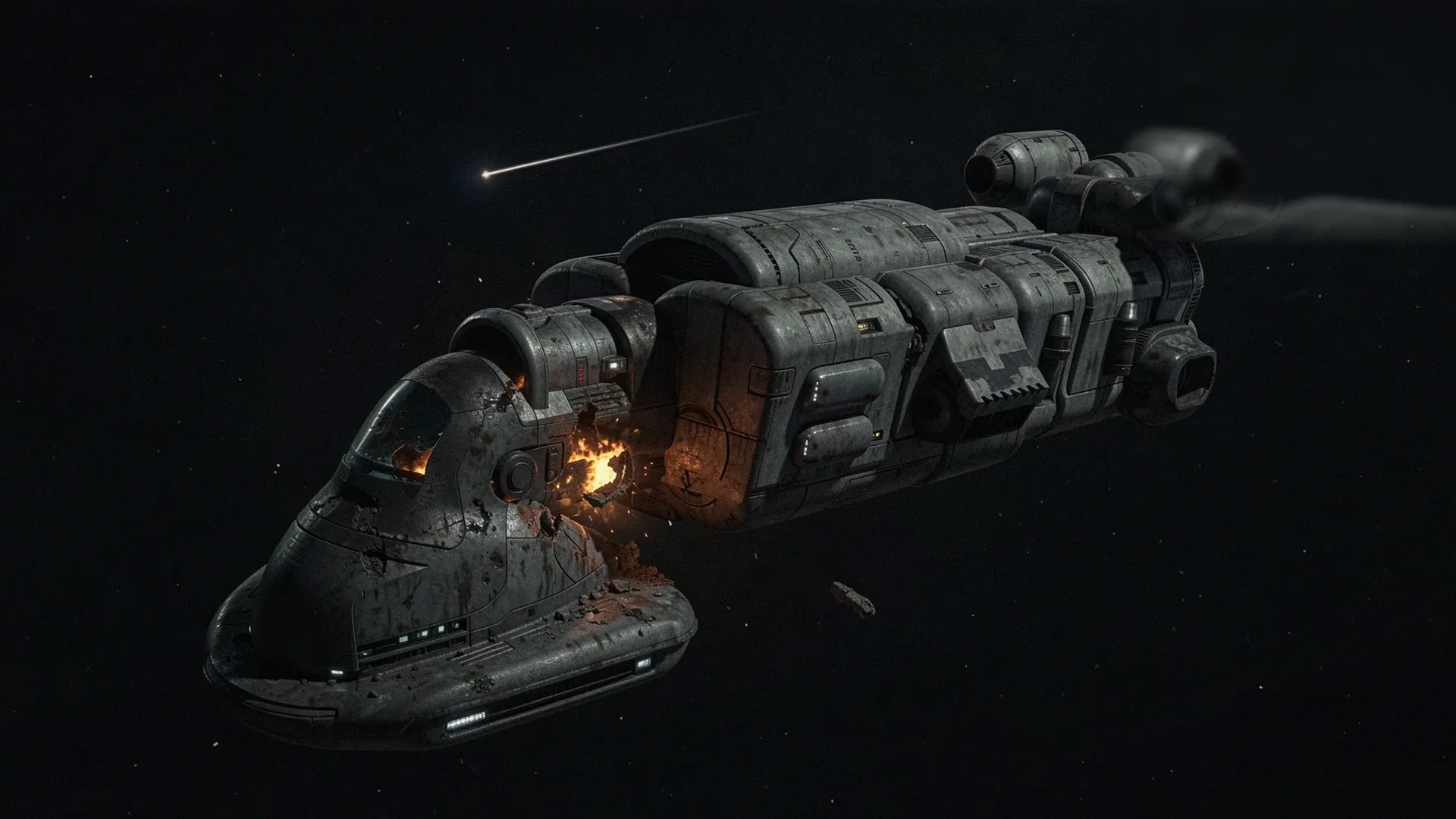


The Manifest Outvalued the Hull
A blockade runner is a ship built around a single, slightly absurd proposition: that the safest way to move an expensive thing is to put it inside something that cannot fight, cannot tank, and is not supposed to be seen at all. The Viator is the cargo-side expression of that idea. It is also, by design, the cheapest component of its own loss. Set the fitted hull and modules against the freight in its hold and the ship barely registers - well under one percent of the total that went up in Thera. The freight is the story, and the freight did not all go up. Most of it survived the explosion and spilled into the wreck, a quantity worth roughly 157 times the fitted ship alone. That is a strange sentence to write about a destroyed vessel: the ship was the least valuable thing about the wreck it became.
The Junction Tax, Collected Again
Thera has one job in New Eden, and it is to be the shortcut everyone takes and no one quite trusts. Through-traffic is the system's entire economy and its entire hazard; the wormhole junction does not care whose manifest is passing through it. For a Viator in particular this is the wrong neighbourhood to be noticed in, because the ship's answer to trouble is invisibility and its fallback is nothing at all. Somebody saw it. What follows on the loss side is a clean, unglamorous ledger entry for SUETA UNIVERSE: one covert hauler gone, one final blow credited to Roue. What follows on the cargo side is a separate story that the wreck does not tell - the surviving freight, roughly 157 times the value of the ship that carried it, changed hands or did not, and either way it will never appear in the same column as the hull. The hull is simply the receipt.