Fifty-Six Billion ISK, Filed Under Skirmish
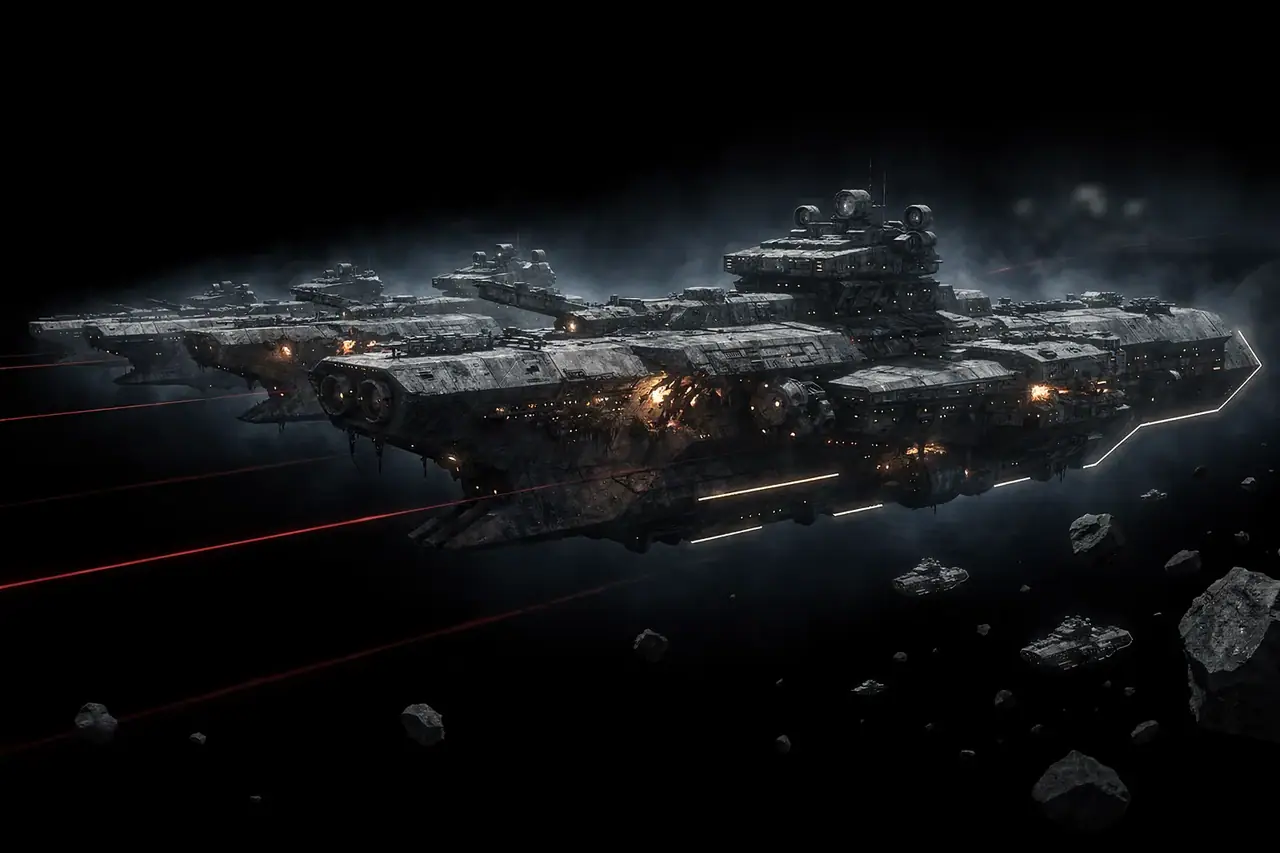
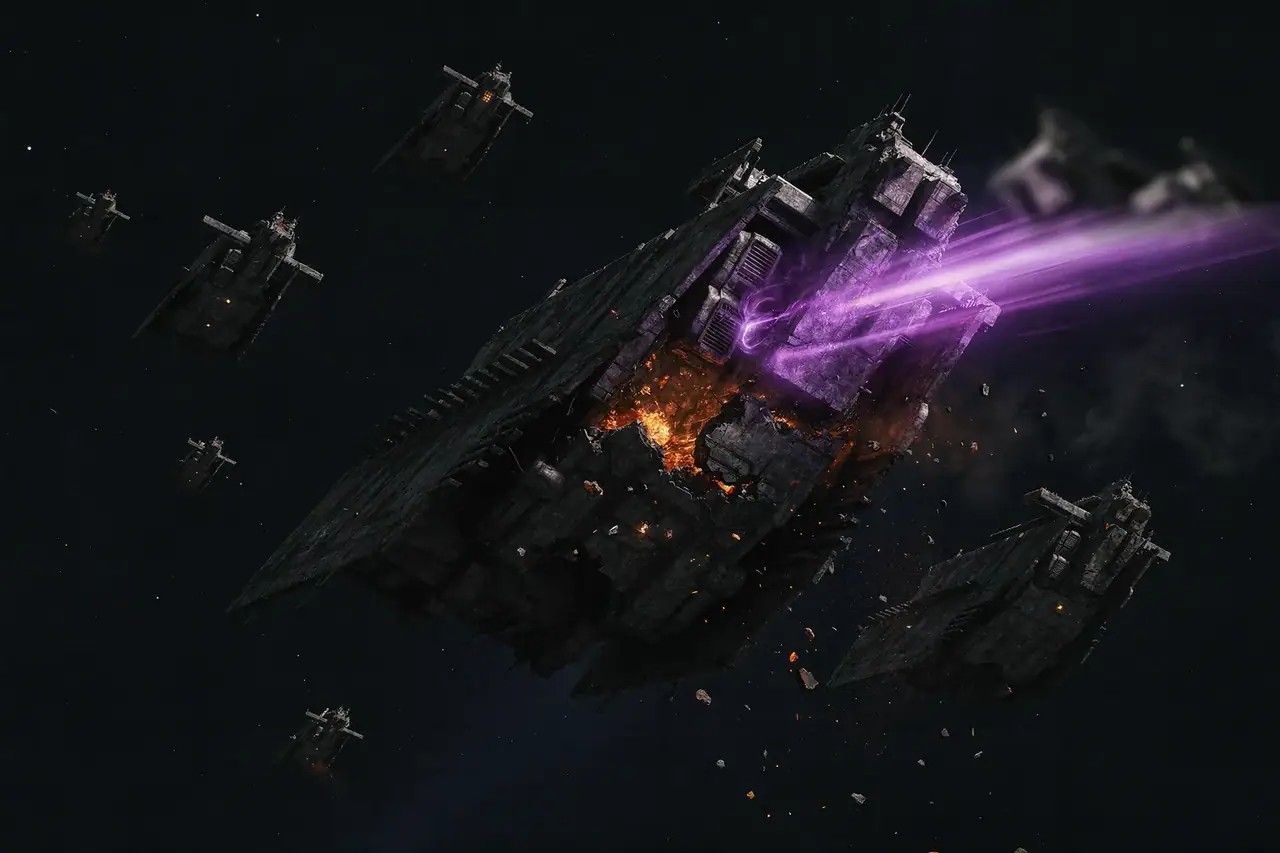
A Hel is not something you misplace. It is a supercarrier: a hull that sits above the ordinary carriers, carries squadrons of fighters instead of a normal weapons array, and exists in EVE Online as a statement of industrial and organisational intent. Alliances spend months assembling the minerals and the blueprints, and pilots spend months learning how not to lose one. The Hel that died in Parouz was worth 56,590,686,066 ISK. For comparison, that is roughly the price of a couple of hundred well-fitted battleships - an entire mid-sized fleet's worth of metal compressed into one ship. Ships like this do not usually die quietly. When a supercarrier is caught in earnest, the killboard tends to groan: hundreds of pilots, capitals cascading in, cynosural fields lit one after another as both sides escalate. Parouz produced none of that. The record shows thirteen unique pilots and exactly one destroyed ship. The engagement is classified as a skirmish. Technically, that classification is correct. The price tag would like a word.
A Supercarrier Cannot Sneak Anywhere
Supercarriers do not use stargates. They jump, and they jump to a cynosural beacon lit by another player. That single mechanical fact does more work than any conspiracy theory: a Hel in Parouz did not drift there, did not take a wrong turn and did not end up in the wrong system by accident. Someone chose to bring it there, and someone else chose to light the way in. Whether that decision was routine logistics, a deployment, a contracted haul or simply a pilot moving an asset, the record does not say - and it is worth being careful about reading too much into a single killmail. What can be said is where it happened. Parouz sits in Aridia, low-security space: the band of New Eden where there is no sovereignty to defend, where security status is a running tab rather than a rule, and where a capital ship is simultaneously more conspicuous and less protected than it would be in null-sec or in high-sec, which it cannot enter at all. Whether LowSechnaya Sholupen were waiting for precisely this ship or simply had a gang in the right place with nothing better to shoot, the outcome was the same either way.
Once It Stops Moving, the Clock Starts
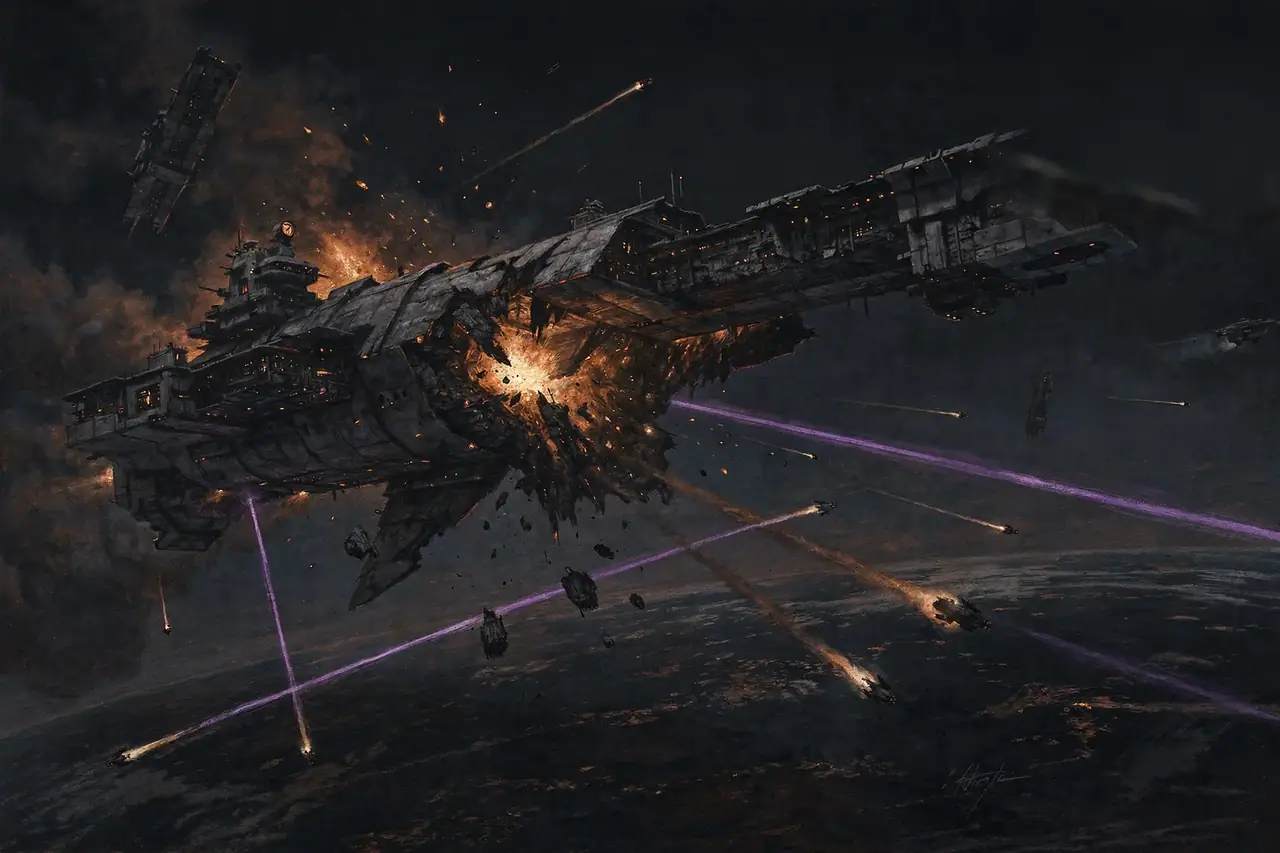
A supercarrier is not nimble. Its value comes from fighters, reach and durability, not from getting out of trouble. The moment something fast enough and brave enough holds it in place, the situation stops being a fight and becomes a countdown. Two things can happen next: a rescue fleet arrives and the countdown is reset, or it is not, and the hull comes apart in front of everybody. In Parouz, the countdown finished. The record lists no attacker losses at all - thirteen participants, one wreck. That tells you the group doing the killing was small, and that whatever they brought was enough. It does not tell you whether a rescue was attempted and arrived too late, whether one was attempted and turned back, or whether there was simply nothing in range to answer. A single killmail is not a battle report, and it should not be read as one. What it does show is how narrow the margin gets outside the protective architecture of null-sec. A supercarrier in a defended region is a fleet asset: it has friends, it has a chain of cynos pointing home, and its loss requires an enemy to win something first. A supercarrier in someone else's low-sec neighbourhood is just a very expensive ship in the wrong postcode, and it stays alive only as long as nobody nearby has a tackler warmed up. The transition between those two states takes seconds, and it does not take a large fleet to exploit.
The Bill Goes to Test Alliance
Losses of this size land differently depending on where you are standing. For Test Alliance Please Ignore, 56.6 billion ISK is not an existential wound - alliances of that scale lose and replace far more than this in a single campaign - but it is a genuine line item. Supercarriers are not bought off a shelf. They come out of long industry chains, they require structures capable of building them, and the replacement clock always runs slower than the loss does. The ship was probably not doing anything dramatic when it died. Most expensive losses happen during the boring part. For LowSechnaya Sholupen, the arithmetic points the other way. A supercapital kill, recorded against thirteen pilots, is the sort of mail that stays pinned for a while. Whatever the attacking gang actually flew, the trade was grotesquely one-sided: some quantity of affordable ships on one side, and a supercarrier on the other. Those are the engagements that low-sec groups remember, and the ones that get screenshotted into corp channels for years.
The Mail Will Always Say Skirmish
Parouz will not be remembered as a battle. There was no escalating capital brawl, no structure timer, no strategic objective seized or lost, no tide that turned. The record will say: skirmish, thirteen pilots, one kill. Anyone scrolling past it quickly could be forgiven for assuming someone lost a cruiser. Then they will see the number. Fifty-six thousand million ISK, attached to a single hull, killed by a gang that could fit in one squad. That is the detail that makes this one worth keeping - not the fight itself, which was probably brief and one-sided, but the sheer disproportion between what was risked and what was taken. Somewhere in the wreck of a Minmatar supercarrier is the entire industrial effort of an alliance, converted into somebody else's killboard entry in a low-sec system nobody was fighting over. The lesson, as ever, is not complicated. Big ships do not die because they are weak. They die because of where they are, who is nearby, and how long it takes help to arrive. In Parouz, that arithmetic did not work out.