Twelve Hours in the Vale
The engagement opened without ceremony. At 12:20 UTC a Retribution belonging to Serenity Moe University was destroyed in 4-HWWF, a system in the Vale of the Silent. It was, by the standards of the day, an unremarkable loss - one assault frigate, gone - and nobody could have known it was the first entry in a ledger that would run for most of a day. The last entry landed at 00:18 UTC: a Purifier attributed to Cloaked Goof. In the twelve hours between those two wrecks, the system hosted around 8,464 pilots and produced 6,783 confirmed losses. Across 719 minutes, that works out to roughly one ship destroyed every six and a half seconds, sustained, without a pause long enough to call a lull. This was not a trap that snapped shut and was over. It was a slow, grinding, exhausting engagement that kept finding new reasons to continue.
Cheap Hulls, Absurd Volume
Half a trillion ISK sounds like capital warfare, and the data does classify this as a capital battle, with four capital losses recorded. But the financial shape of the fight tells a different story. Remove the Keepstar from the arithmetic and roughly 335 billion ISK is spread across 6,782 wrecks - an average of about fifty million ISK per ship. These were frigates, cruisers, bombers, heavy assault cruisers and everything else a fleet can throw at a problem when the problem refuses to go away. The notable loss lines make it plainer still. Purifiers account for close to 48 billion ISK of destruction. Muninns account for around 27 billion. Manticores add another 15 billion. No individual bomber or HAC costs those figures, which means the numbers describe squadrons - whole wings of stealth bombers and Muninn fleets fed into the same meatgrinder and coming out the other side as salvage. This was never a fight decided by one clever fit or one perfect engagement. It was decided by who still had hulls in the hangar.
Capitals and One Very Busy Pilot
The presence of four capital losses confirms that the big hulls were committed rather than kept safely docked and watched admiringly on the overview. Capital ships on field change the calculus of any fight, and their destruction here - alongside thousands of smaller losses - indicates an engagement that escalated repeatedly rather than settling into a stalemate at subcapital level. One pilot in particular appears to have had the evening of their life. Hroki Saken is recorded as the top damage dealer of the engagement, a statistic that in a fight this size means an extraordinary amount of time spent holding a trigger down while surrounded by 8,464 other people trying to do the same thing. Whatever else happened at 4-HWWF, someone got their money's worth from their ammunition.
The Keepstar Line
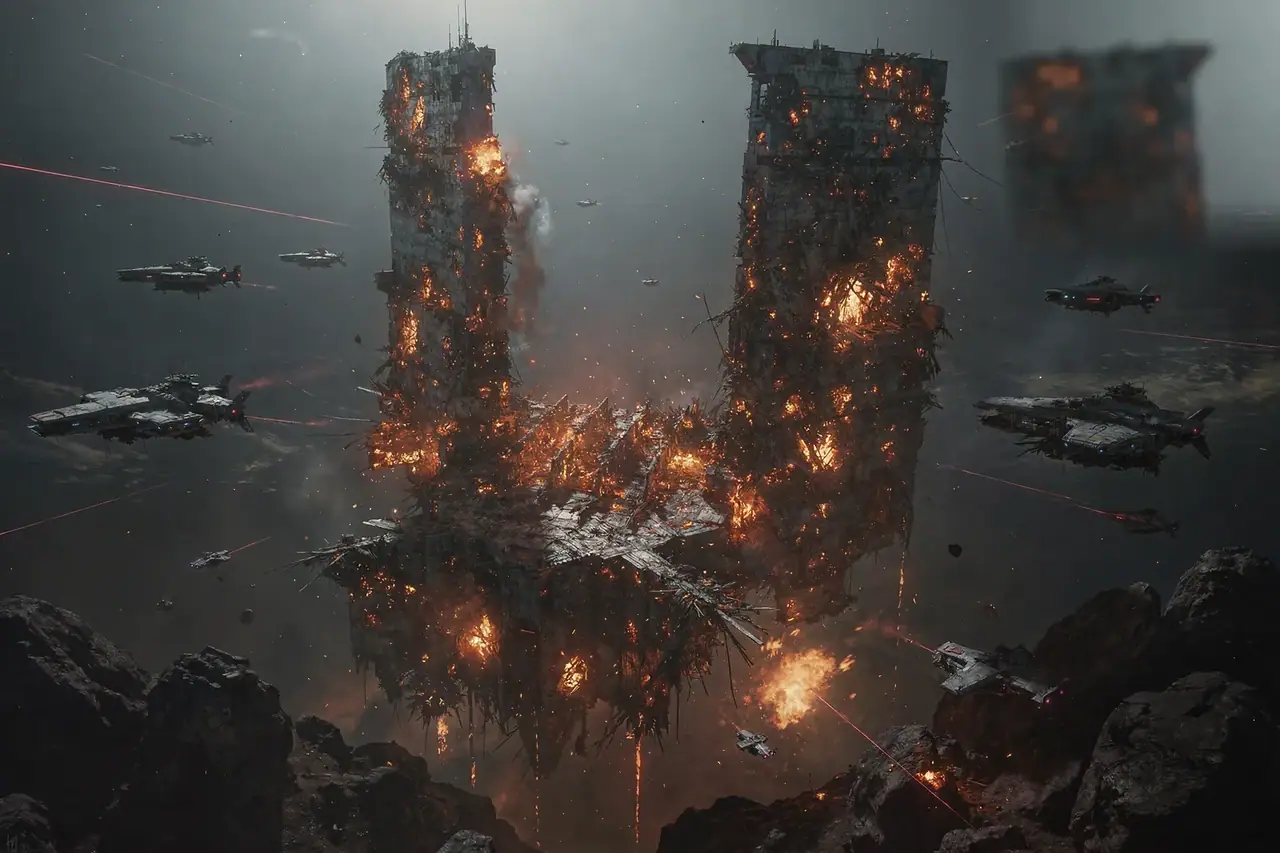
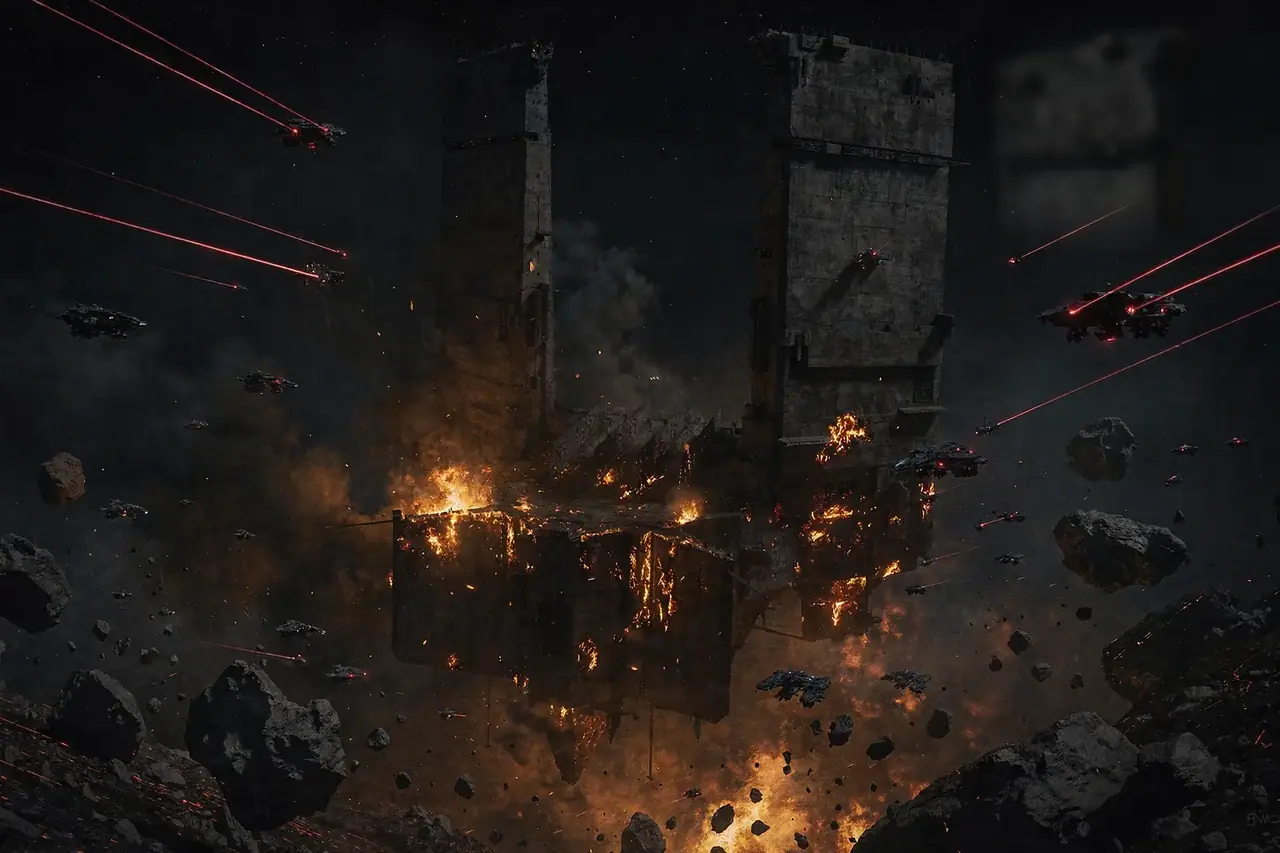
The Keepstar is the only structure loss recorded and, by an enormous margin, the most valuable single item on the field. At 180.5 billion ISK it represents just over a third of everything destroyed, and nearly four times the entire Purifier total - a figure that itself reflects an entire bombing campaign's worth of hulls. A Keepstar does not come apart quickly or by accident. Bringing one down requires a committed fleet, a long window of uncontested firepower, and enough patience to chew through a structure built specifically to survive that kind of attention. Its appearance in the loss list next to 6,783 other wrecks suggests this was not a raid that got lucky, but a sustained siege that had time to finish what it started. Structures of that size are not lost in a skirmish. They are lost by people who showed up and stayed.
Who Was Doing the Shooting
The organisations with the highest confirmed kill counts on the attacking side were Sensible People with 1,259, Special law enforcement department with 406, Fuxi Legion with 243, The Northerners with 237 and STARCHASER Inc with 211. On the receiving end, the heaviest losses fell on KarmaFleet with 498, Peoples Liberation Army with 284, Ascendance with 173, GoonWaffe with 129 and Brave Newbies Inc. with 122. Those two lists do not overlap, which reads like a fairly clean attacker–defender split rather than a three-way brawl that dissolved into everyone shooting everyone. That said, the named organisations account for only a fraction of the 6,783 losses. A great many other corporations and alliances were present, bleeding and taking names in the margins. The data can tell us who suffered most. It cannot tell us who won, and in a fight lasting half a day, that distinction tends to blur anyway.
What Twelve Hours Leaves Behind
The last ship to die in 4-HWWF was a stealth bomber, at eighteen minutes past midnight, twelve hours after an assault frigate had been the first to go. In a day full of notable losses - bombers by the squadron, Muninns by the score, a capital group, and one genuinely colossal structure - the final wreck is the least remarkable and the most representative thing about the whole affair. The bill is 515.8 billion ISK. One Keepstar is gone from the Vale of the Silent, four capital ships are gone with it, and several thousand pilots will spend the next few days rebuilding hangars that took months to assemble. The system will be quiet for a while. Then someone will notice the replacement timer, or the next fleet will form for the next objective, and 4-HWWF will do this all over again.