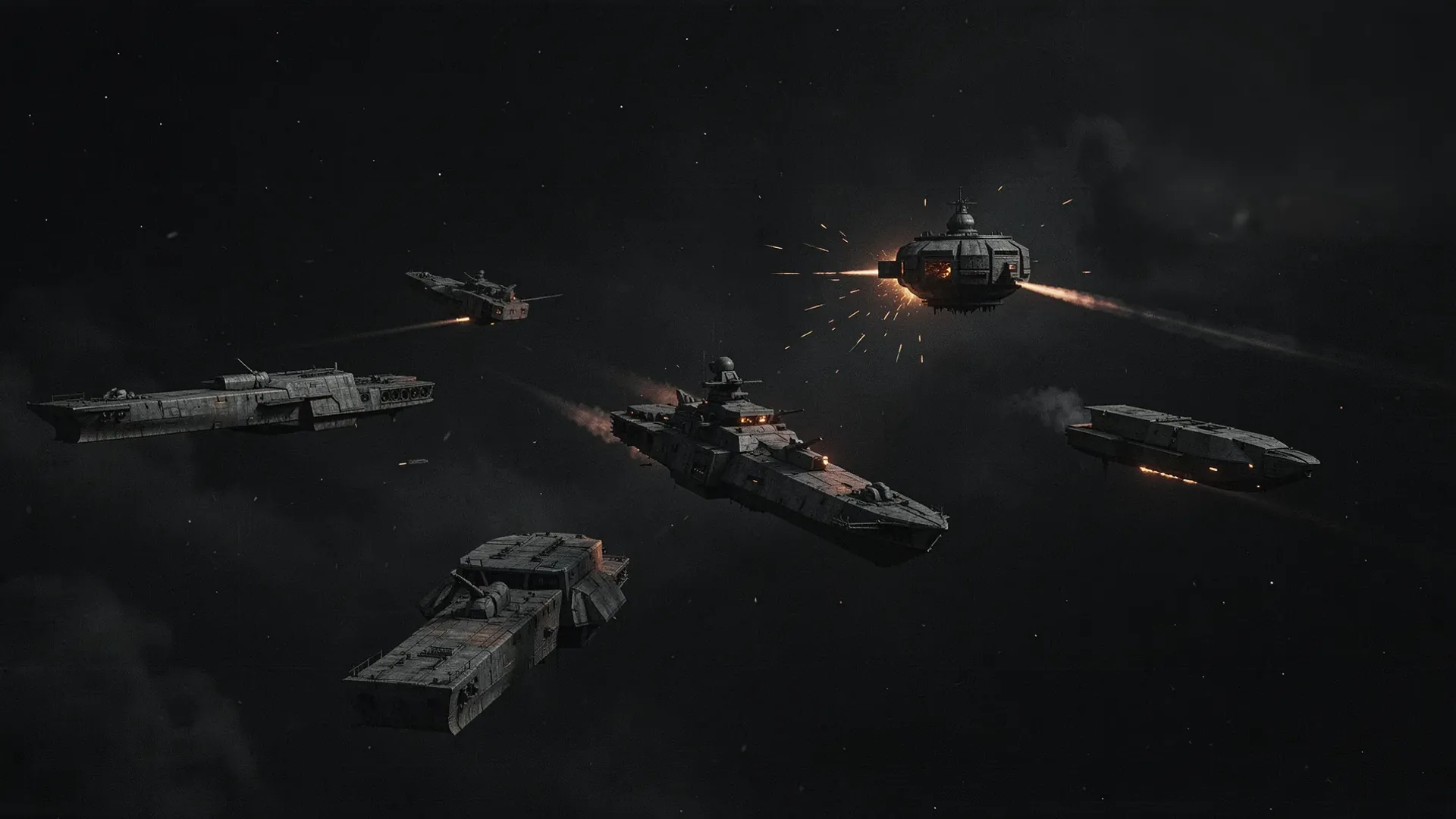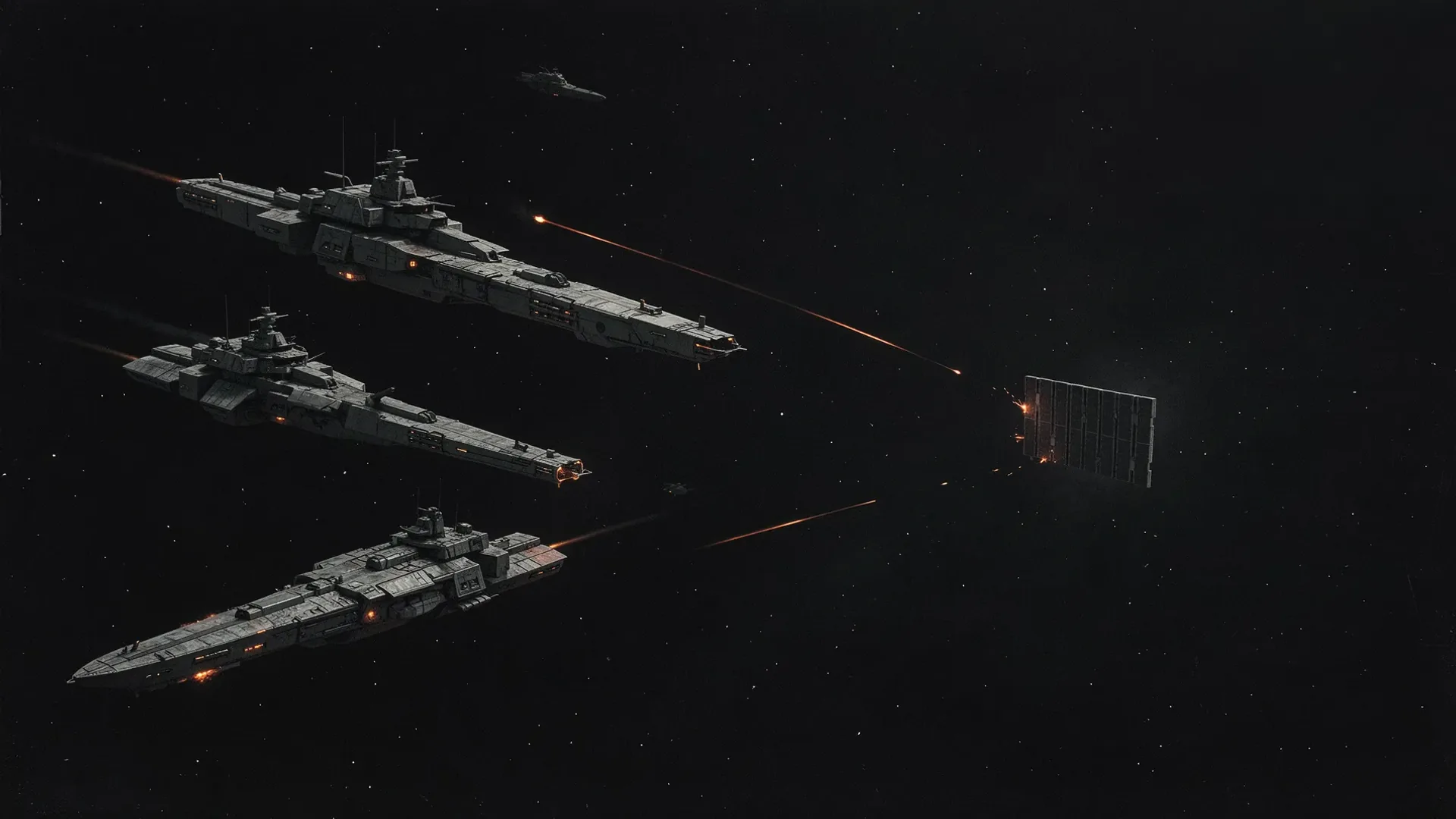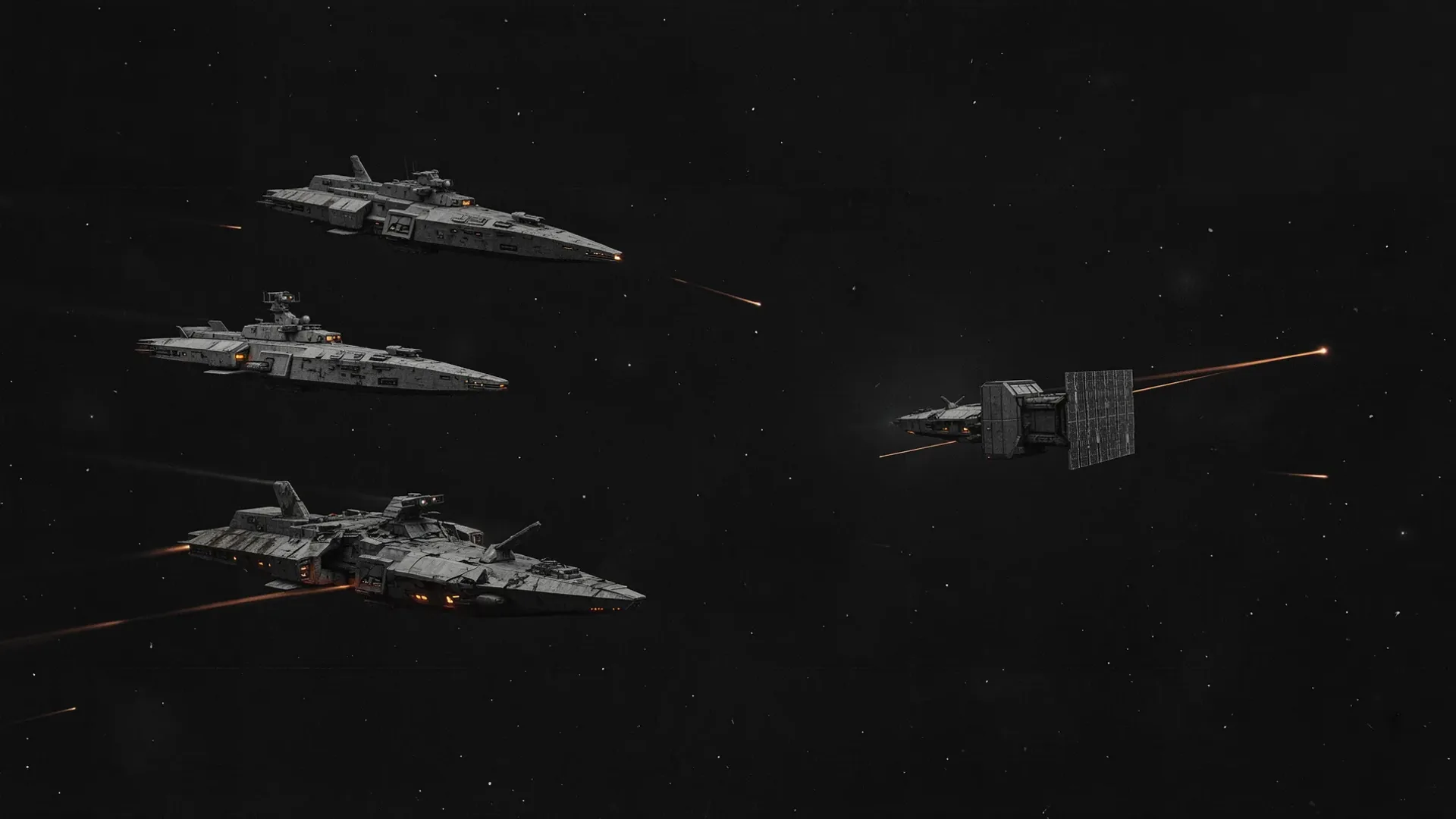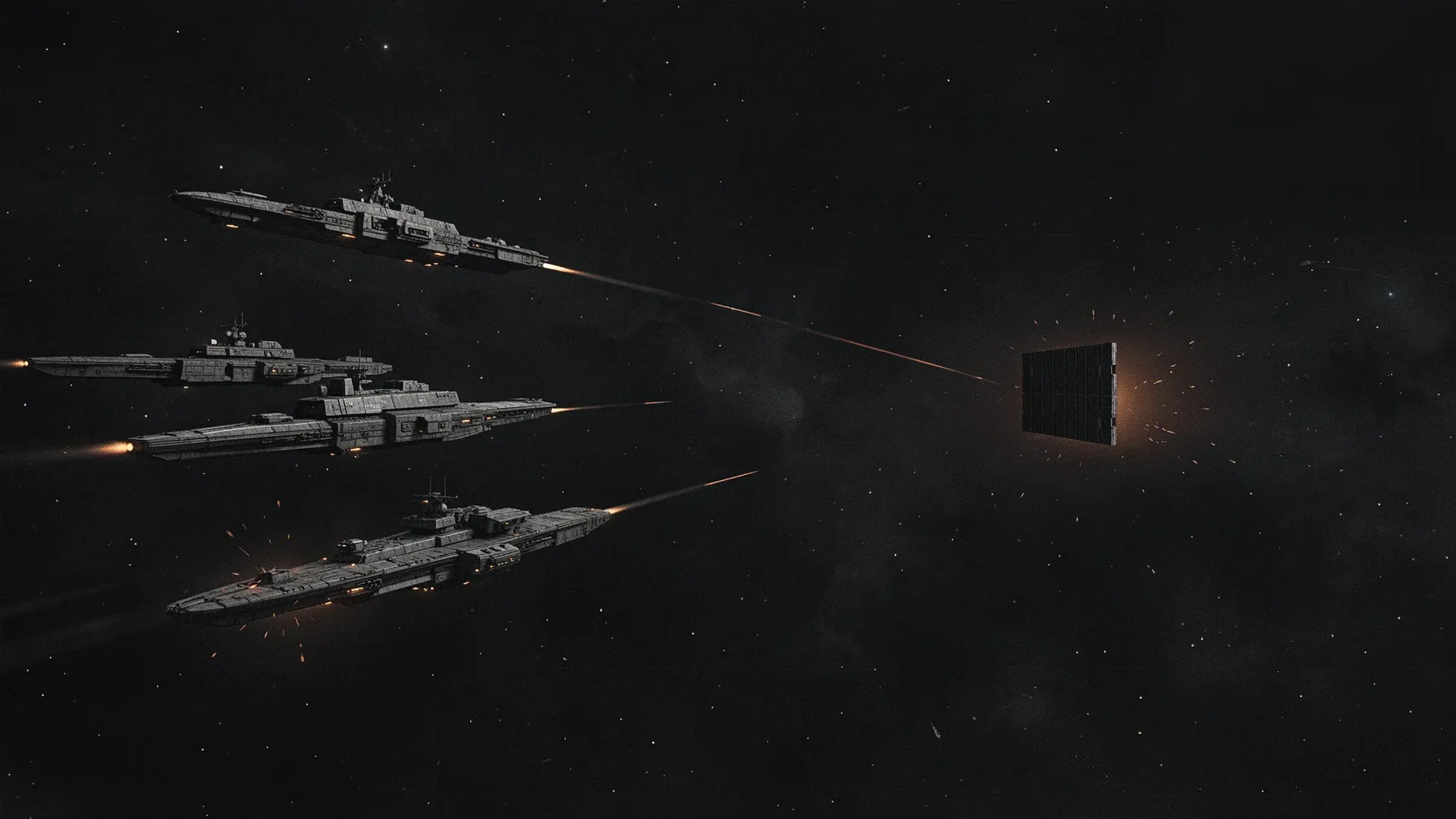
A Front That Breathes
The contested footprint has spent the last week doing something unusual: it expanded to nine systems, collapsed to two, then swelled again to eight before settling at six. 5-VFC6 was on the front from the start of tracking before falling away, while IUU3-L joined early in tracking and later dropped off. 86L-9F and A-YB15 took their places on the front early and stayed through the later observations. The current six - 86L-9F, A-YB15, HVGR-R, K76A-3, RAI-0E, and TA9T-P - are places under ihub defence, campaigns that have persisted without a transfer of control.
Four Defending Groups, Four Fronts
The defence splits along group lines: ZERG SPAWNER defends a two-system constellation with moderate intensity and a defender score of 60 to 40; Hashashin Cartel defends two more systems at 64 to 37 in the same moderate state; UA Fleets Holding and Deepwater Hooligans each defend a single low-intensity system at 60 to 40. The leading front belongs to ZERG SPAWNER, whose constellation has been contested for 58 hours. The scores reflect a defenders' edge, but the attackers are present enough to keep every campaign live.
The Scoreboard Says Stalemate
Across 18 observations over roughly 154 hours, the attacker average has barely moved: 39 out of 100, down from 40. The defender average sits at 61. At one point the attackers dipped to 35 before clawing back to 39, and the defenders' advantage held throughout. This is not a front that is being rolled up; it is a front that is being politely prodded. The ihub defence campaigns remain active and the defenders' sovereignty is unchanged. In a universe where sov warfare often hinges on a single missed timer, that equilibrium is its own story.
Pressure Without Breakage
The absence of sovereignty changes is not an absence of news; it is the news. The campaign area is 68 hours old and currently spans six systems, each under ihub defence. That is six separate campaigns, six chances for a mistake, and six times the defenders have kept their sovereignty intact. The attackers, whoever they are, have not been able to turn any of these campaigns into a capture, and that is the whole point. The front may look static from a distance, but up close it is a series of small holds, a test of patience as much as firepower. The real story is that the defenders are still there, still holding, and the contest continues with no sign of a breakthrough.