THE TURN
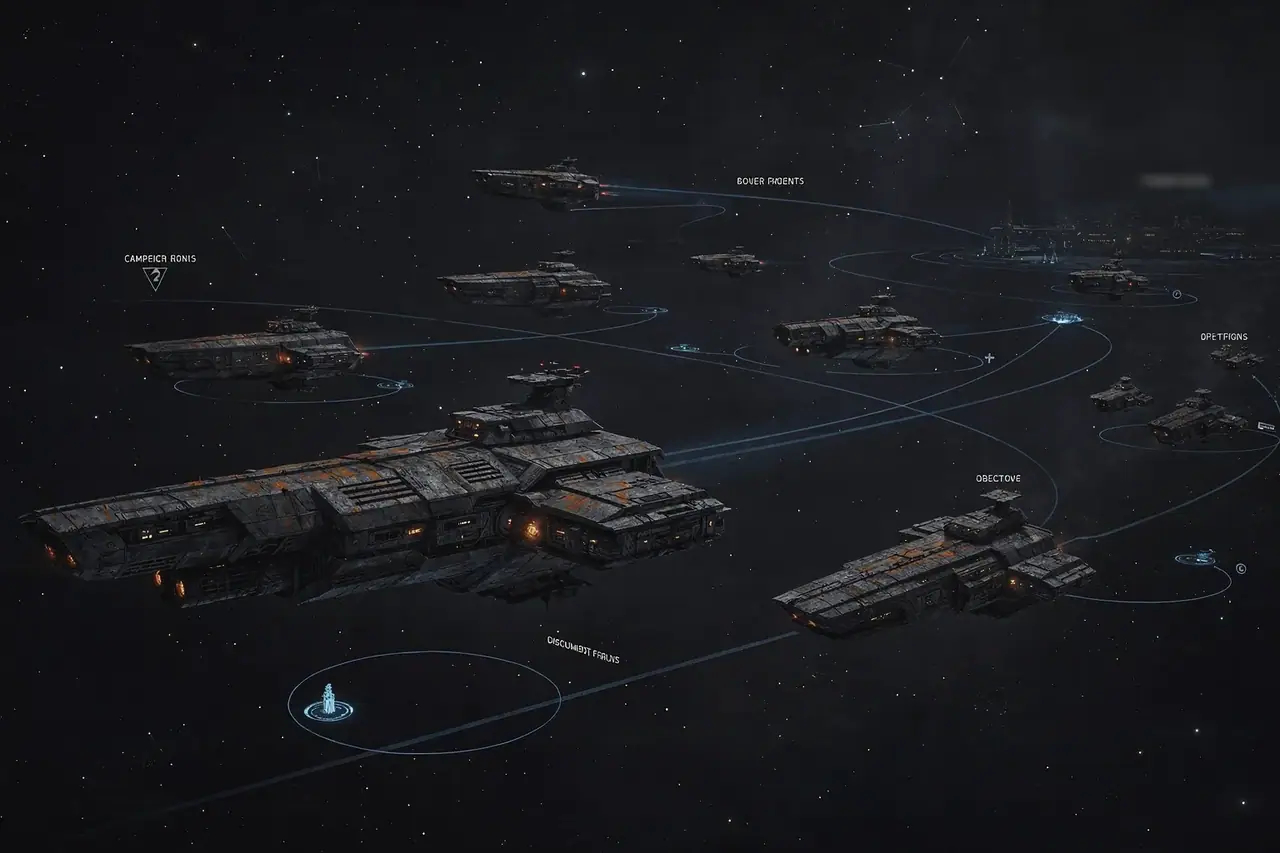
The clearest change in Outer Passage is that the defenders are no longer simply absorbing pressure. With D3ad End regaining ground, the campaign has moved from an early push into a more contested phase. That matters because a front that begins to swing back can force the opposing side to spend time, ships, and attention just to keep the advance alive.
THE WIDENING FRONT
The systems now in play, JBUH-H and XDTW-F, point to a campaign that is spreading rather than narrowing. Added systems usually mean the pressure is reaching farther into the region, and here that broader footprint may indicate the fight is becoming harder to isolate. For the defenders, that can be both a burden and an opportunity: more space to protect, but also more room to absorb and redirect the assault.
THE SHAPE OF THE CAMPAIGN
This remains a growing campaign in a region where the balance is still in motion. With the front active across multiple systems and the defenders recovering ground, the picture is one of an unsettled border rather than a decisive breakthrough. The removal of 8K-QCZ and SN-DZ6 from the immediate system list suggests the pressure is shifting, not disappearing, which can be a sign that both sides are adjusting to the shape of the fight.
WHAT COMES NEXT
Outer Passage is now at the stage where momentum matters as much as territory. If the defenders continue to claw back space, the campaign could become more expensive and less predictable for the side applying pressure. If the widening front keeps expanding, however, the region may yet see another round of strategic movement before either side can claim real stability.